.png)
Long Jack Phillipus
Tjakamarra
1932-2020
Ancient culture of 60 thousand years gave the World its most exciting
Contemporary Art |
|
If you love quality
Art of
impeccable
provenance,
the
art
you want is at
Galeria Aniela
|
|
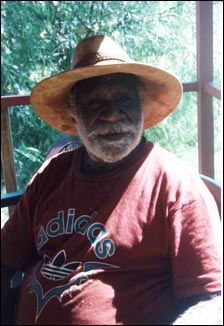
Long Jack Phillipus Tjakamarra
is a renown Australian Aboriginal master-artist.
Long Jack
was
one of
the first few men to paint under
Geoffrey Bardon
that began
the Papunya Art Movement.
Long Jack Tjakamarra is one of the first founding members of the Papunya Tula
Artists. Long Jack is considered one of Australia’s leading Aboriginal Artists
and its chairman in 1975 and again in the early 1990s. Long Jack
paintings are acknowledged within the World’s most contemporary works of fine
art.
In 1971
Long Jack Phillipus
and
Billy Stockman
painted mural
'Widows Dreaming' and 'Wallaby Dreaming' preceding the major
'Honey Ant' mural.
Long
Jack
awards
include(1983) Northern Territory Golden Jubilee Award and (1984)
Alice Springs Caltex
Award.
Long Jack
Phillipus
work is held in
National Gallery of Australia,
National Gallery of Victoria,
National Museum of
Australia
and major international
collections.
Long Jack
is
successful in the
World Art Market,
considered
a Blue-chip,
offers an alternative investment on the secondary art market.
Kalipinypa
sold for
$231,800,
Water
Ceremony
$98,182,
Kangaroo Story
$90,500,
Possum Dreaming
$74,400,
Bush Tucker
$70,760. |
|
|
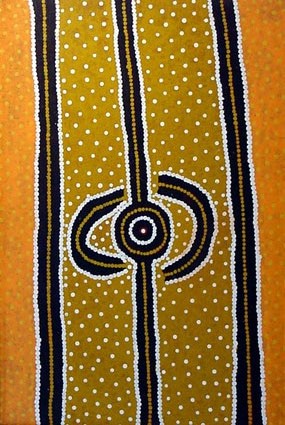
enlarge
Long Jack Phillipus
Tjakamarra
Water Dreaming
Acrylic on Belgian linen
Image Size:
91
x
61
cm
Framed size: 120 x 90 cm
Price:
Enquire
Related Works
|
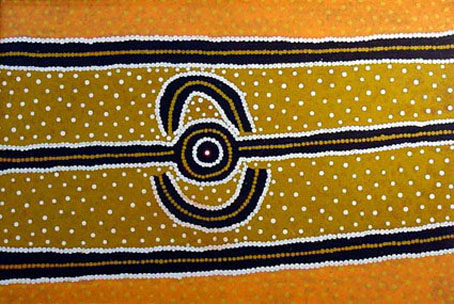
enlarge
Long Jack Phillipus
Tjakamarra
Water Dreaming
Acrylic on Belgian linen
Image Size:
61 x
91 cm
Framed size: 90 x 120 cm
Price:
Enquire
Related Works
|
|
|
|
Water Story
Water Dreaming
painting has a classic design of a roundel linked by meandering lines, often evident in
the earliest of the Papunya boards.
Artists such as
Billy Stockman,
Jonny Warangkula Tjupurrula, Charlie Wartuma Tjungurrayi, Old Walter
Tjampitjinpa together with Long Jack Phillipus Tjakamarra all executed
versions of the Water Dreaming.
Water Dreamings are highly iconographic
works
made up of geometric shapes, such as roundels, ovoid forms and crescent shapes.
The ability to find water in a desert environment is paramount to survival, and
the knowledge of where springs, rock-holes and other sources of water were to be
found, was an indication of importance.
Water Dreaming stories were
secret and only available to initiated men of senior standing.
Long Jack Phillipus (1932-2020) and
Billy Stockman
Tjapaltjarri (1925-2015)
were instrumental members in the beginning of the contemporary Western Desert.
Reference:
Bardon, G. and Bardon, J., Papunya, A Place Made After the Story: The
Beginnings of the Western Desert Painting Movement, The Miegunyah Press,
Melbourne, 2004, p. 49
|
|
Now artists live and work around the world, from
Papunya to Paris, from
Arnhem Land to New York, learning new ways and painting their new stories.
|
|
|
|
|
Auction Results related-works
Long Jack Phillipus Tjakamarra (1932-2020)
Under the freedom of
information we have compiled relevant data for your
enjoyment
|
|
Details |
Price excl. GST |
|
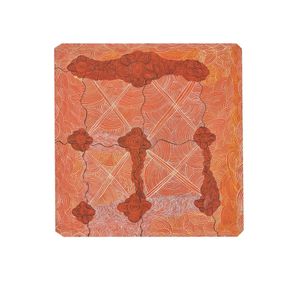 |
1-Kalipinypa
Untitled (Kalipinypa), 1972
Synthetic polymer powder paint on composition board,
inscribed lower right: '4023', inscribed verso:
'19141 / 3 of 9/10/72'
122 x 119 cm,
Est: $70,000-100,000, Bonhams, The Serra Collection
of Aboriginal Art including property from various
vendors, Sydney, 22/07/2020, Lot No. 16 |
$231,800 |
|
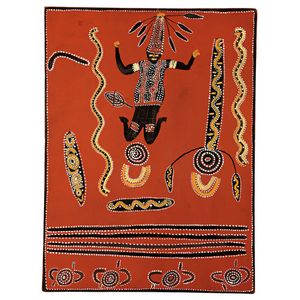
|
2-Water
Water Ceremony Story
Synthetic polymer paint on composition board
61 x 45.7 cm,
Est: $80,000-120,000, Smith & Singer, Important
Australian & International Art, Sydney, 18/11/2020,
Lot No. 37 |
$98,182 |
|
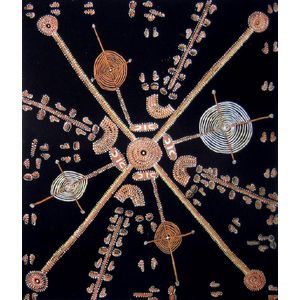
|
3-Kangaroo
Kangaroo Story
Synthetic polymer powder paint on board
71 x 60.5 cm,
Est: $50,000-60,000, Deutscher~Menzies, 19th and
20th Century Australian & International Paintings,
Sculpture and Works on Paper, Melbourne, 20/04/1998,
Lot No. 2 |
$90,500 |
| |
|
|
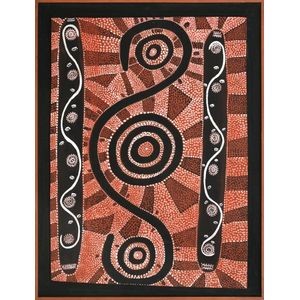 |
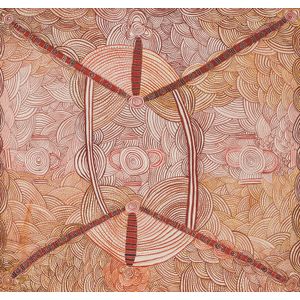
posum-4a
Possum Dreaming, 1972
Natural earth pigments on masonite,
67 x 49 cm, Est: $30,000-50,000, Cooee Art Leven,
Indigenous Fine Art, Sydney, 08/03/2022, Lot No. 36 |
$74,400 |
|
|
|
|
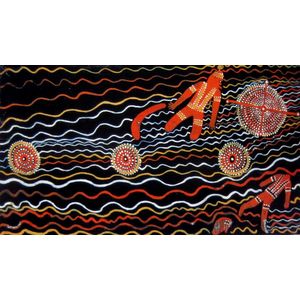
4-Bush
Bush Tucker Story
Synthetic polymer paint on composition board,
inscribed verso with Stuart Art Centre consignment
number 18050
72 x 77 cm,
Est: $40,000-60,000, Bonhams, Important Australian
and Aboriginal Art, Sydney, 14/11/2018, Lot No. 18
|
$70,760 |
|
|
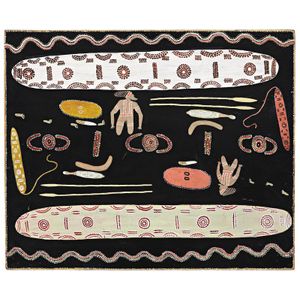
5-Children
Children's Kadaitcha Dreaming
Synthetic polymer powder paint on board
35 x 56 cm,
Est: $60,000-80,000, Deutscher~Menzies, 19th and
20th Century Australian & International Paintings,
Sculpture and Works on Paper, Melbourne, 10/08/1998,
Lot No. 12 |
$63,000 |
|
|
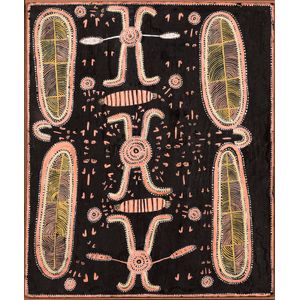
Hunting
Synthetic polymer powder paint on composition board,
bears inscription verso: 7003
76 x 91.5 cm,
Est: $30,000-40,000, Deutscher and Hackett,
Aboriginal Art from the Luczo Family Collection,
USA, Melbourne, 19/10/2016, Lot No. 28 |
$61,000 |
|
|
Mala (Spinifex Wallaby)
Synthetic polymer powder paint on composition board,
bears inscription verso: Stuart Art Centre cat.
18030
60.5 x 51 cm,
Est: $45,000-65,000, Deutscher and Hackett,
Important Australian & International Fine Art;
Important Indigenous Art, Melbourne, 29/11/2017, Lot
No. 45 |
$54,900 |
|
|
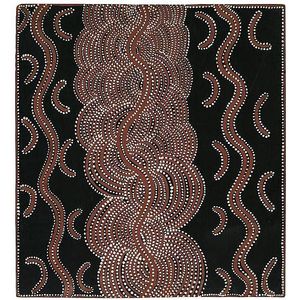
Snake Dreaming
Natural earth pigments and bondcrete on composition
board
50 x 40 cm,
Est: $20,000-30,000, Sotheby's, The Anthony &
Beverly Knight Collection of Early Papunya Art (Lots
1 – 46); Important Aboriginal & Oceanic Art (Lots
47, Melbourne, 28/05/2013, Lot No. 19 |
$53,680 |
|
|
|
|
http://www.aasd.com.au/
Wikipedia
Art Index - The Art of Investment
|
|
|
|
Ala040411LJP
Horisontal
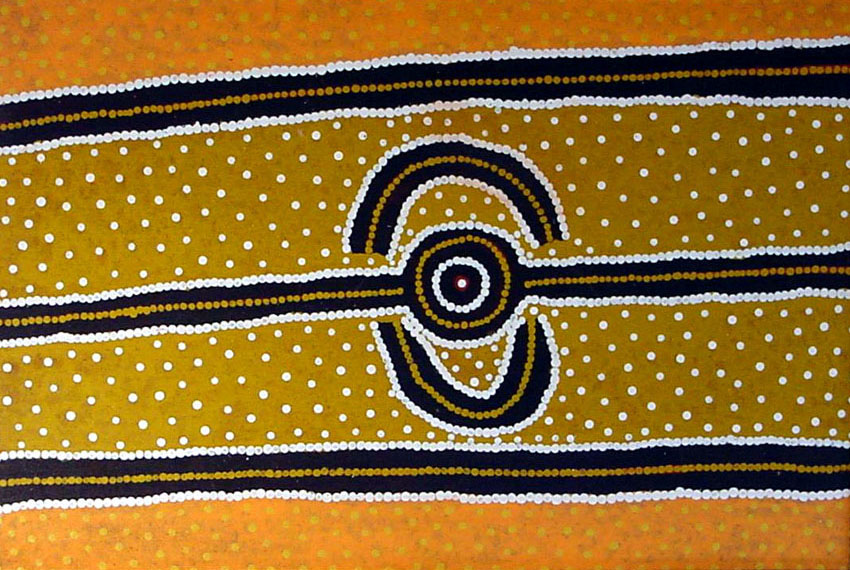
Long Jack Phillipus
Tjakamarra 1932-2020,
Water Dreaming 1998
Synthetic polymer paint on Belgian linen
Image Size:
61 cm x
91 cm,
Framed size: 90 cm x 120 cm
Water Dreaming 1998
is a museum-quality
painting that has
the physical presence of much contemporary work of
fine art.
water-provenance
Provenance:
Warumpi Arts
Established
in 1994 by
Papunya Community Council, was
the first Aboriginal Community
Art Gallery fully
Owned,
Operated by Aboriginal artists
in Alice Springs,
was
maintained by
Papunya Tula Artists
until September 2004.
Price:
Enquire
|
|
|
|
Water-dreaming-vertical
Vertical
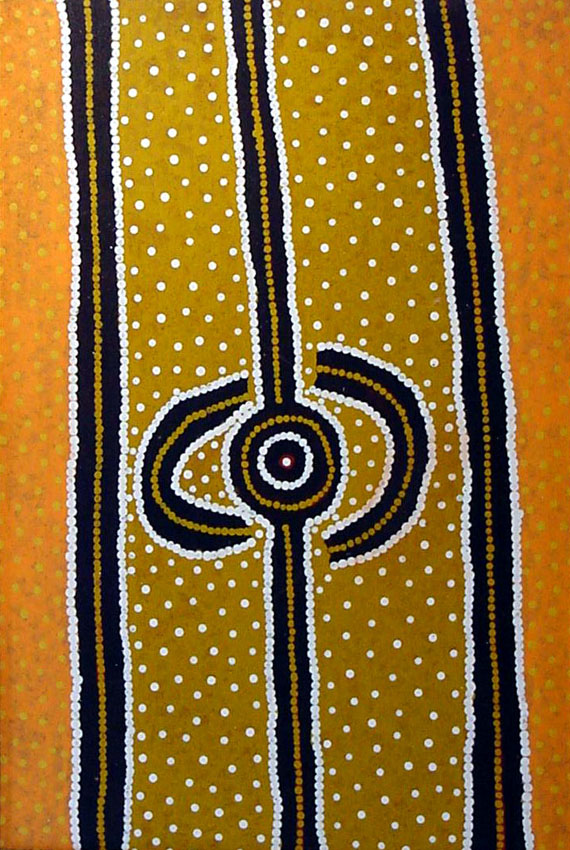
Long Jack Phillipus
Tjakamarra 1932-2020,
Water Dreaming 1998
Synthetic polymer paint on Belgian linen
Image Size:
91 cm
x 61 cm,
Framed size: 120 cm x 90 cm
Water Dreaming 1998
is a museum-quality
painting that has
the physical presence of much contemporary work of
fine art.
water-provenance
Provenance:
Warumpi Arts
established
in 1994 by
Papunya Community Council, was
the first Aboriginal Community
Art Gallery fully
Owned,
Operated by Aboriginal artists
in Alice Springs,
was
maintained by
Papunya Tula Artists
until September 2004.
Price:
Enquire
|
|
|
|
Long Jack Phillipus
Tjakamarra
biography
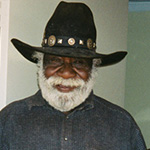 Long Jack Phillipus was
born
circa 1932,
at Kalipinypa, a major Water
Dreaming place, north-east of Walungurru,
in his mother's country.
Long Jack Phillipus biography is in ABORIGINAL
ARTISTS page 350. Long Jack Phillipus was
born
circa 1932,
at Kalipinypa, a major Water
Dreaming place, north-east of Walungurru,
in his mother's country.
Long Jack Phillipus biography is in ABORIGINAL
ARTISTS page 350.
The artist’s name ‘Long Jack’ comes from his unusually tall stature. A former
stockman,
Long Jack Phillipus Tjakamarra
was one of the founding members of Papunya Tula Artists, and its chairman in
1975 and again in the early 1990s.
Long Jack Phillipus Tjakamarra was part of the Papunya Community from 1962. He
was employed as a grounds man and was a member of the community council.
Long Jack Phillipus
was among the
first generation
of the Bardon years 1971–1973)
of the
Aboriginal artists to paint under Geoffrey Bardon’s
influence in the early 1970's
and one of the first masters
responsible for the Aboriginal art movement.
Long Jack Phillipus Tjakamarra was
the founding
group member of
Papunya Tula Artists.
Long Jack was a highly respected elder in the Papunya
Community and has a strong influence on the young people,
particularly in maintaining their traditional ways.
Long Jack Phillipus Tjakamarra
is a renown Australian Aboriginal
master-artist.
Long Jack
was
one of
the first few men to paint under
Geoffrey Bardon
that began
Papunya Art Movement.
In
1971 Tjakamarra and
Billy
Stockman
painted mural
'Widows Dreaming' and 'Wallaby Dreaming'
preceding the major 'Honey Ant' mural.
Long Jack
awards
include(1983) Northern Territory Golden Jubilee Award and
(1984)
Alice
Springs Caltex Award.
Long Jack Phillipus Tjakamarra is one of the
first founding members of the Papunya Tula Artists. Long
Jack is considered one of Australia’s leading Aboriginal
Artists, his unique paintings are acknowledged within the
World’s most contemporary works of fine art.
A former stockman, he was one of the founding
members of Papunya Tula Artists, and its chairman in 1975
and again in the early 1990s. During his childhood he lived
with his family on their traditional lands, before moving to
Haasts Bluff settlement when he was in his teens. In 1984 he
was ordained as a Lutheran pastor and in the same year won a
major art award. He was the last of the founding group of
Papunya artists to continue to paint.
Born in his mother’s country ‘Kalipinya’ [an
important Rain Dreaming site] Long Jack grew up in the bush
west of Pilininyanu until his teenage years when his family
settled in Haasts Bluff.
Long Jack was working as a stockman until in
1959 when Papunya was established and he moved location to
work as a councillor and school yardman. Along with Billy
Stockman Tjapaltjarri, Kaapa Tjampitjinpa, Long Jack were
instrumental to paint ‘Honey Ant Dreaming’ mural on the
school wall.
Long Jack was a Lutheran pastor, his was
family man with five children. Long Jack skills regarding
hunting and tribal knowledge are unsurpassable.
Long Jack exquisite artworks pay homage and
acts as instruments to preserve his culture ancestral
traditions.
The prominence
of Indigenous art is due in part to the motivation and considerable effort of
Aboriginal and Torres Strait Islander artists, particularly painters, who have
played a major role in introducing both Australia and the rest of the world to
Australia's Indigenous cultures.
In
2010 Long Jack Phillipus said to Luke Scholes:
"We started it, like a bushfire, this
painting business, and it went every
way: north, east, south, west, Papunya
in the middle.
Long Jack
Phillipus
work
encompasses significant Dreamings that include: the Spinifex Wallaby, Kingfisher, Dingo, Possum
and Emu Dreamings.
Long Jack paintings also
depict Hare, Wallaby, Kingfisher, Dingo and other Dreamings in the Mt
Singleton area.
A number of his early works on board
depict decorated ceremonial participants and ritual objects
perhaps occasioned by the heightened environment in the
Men's Painting Room, which prompted the artists to
demonstrate visually the strength of their culture and law.
Long Jack Phillipus has worked for
Warumpi Arts,
the first Aboriginal Community
Art Gallery fully operated by Aboriginal artists
Warumpi Arts was the first Aboriginal Community
Art Gallery fully operated by Aboriginal artists, Owned and
Directed by
Aboriginal people.
In 1994 the
Papunya Community Council established its own art centre to give Aboriginal
people of Papunya increased involvement in the commercial aspects of
Aboriginal art. This centre, called
Warumpi Arts, maintained a gallery in
Alice Springs until September 2004 and was the main centre for paintings by
Papunya Tula Artists.
The Papunya
Community Council then decided to close the gallery with the aim of later
opening an art centre in Papunya.
The Papunya Tula
Art Movement began in 1971 when a school teacher, Geoffrey
Bardon,
encouraged some of the men to paint a blank school wall. The
murals sparked off tremendous interest in the community and
soon many men started painting. In 1972 the artists
successfully established their own company.
The company is entirely owned
and directed by traditional Aboriginal people from the
Western Desert, predominantly of the Luritja/Pintupi
language groups. It has 49 shareholders and now represents
around 120 artists. The company derives its name from
Papunya, a settlement 240km north-west of Alice Springs. The
Papunya Tula painting style derives directly from the
artists’ knowledge of traditional body and sand painting
associated with ceremony. To portray these dreamtime
creation stories for the public, has required the removal of
sacred symbols and the careful monitoring of ancestral
designs.
The Western Desert art movement has
come to be seen as one of the most significant art movements of the 20th century.
NGV Symposium – 'Tjukurrtjanu:
Origins of Western Desert Art
give prominence to paintings produced at Papunya and also establishes the vital connection between
the works of art and their sources in ephemeral designs made for use in
ceremony.
Long Jack Phillipus father was a Warlpiri man, from Parikurlangu came to the
north of Kalimpinpa and Long Jack mother was of mixed Warlpiri/Luritja
woman, she also came from Kalimpinpa.
Long Jack
Phillipus grew up in the bush west
of Mt Farewell and came into Haasts Bluff settlement with his whole
family as a teenager.
He lived in Papunya and was close to
his 'brother', Michael NELSON, with whom his family camped Haasts Bluff in the
early years before the Papunya settlement. His younger sister, Pauline
WOODS, is a well-known Western Desert artist currently working out of
Alice Springs. He worked at Haasts Bluffas and married Georgette Napaltjarri. They have two sons,
three daughters and many grandchildren.
Jack Phillipus was
one of the most senior and important artists of Papunya, he has painted
continuously
the important Rain Dreaming, north-east of Kintore since
in 1971.
L EGEND
C oncentric circle represent the sacred site
West
Papunya in which ceremonies
and various other deeds were performed by ancestors of the desert Aboriginal
people.
These ancestors travelled the area in the Dreamtime world-creation
period and their ceremonies created and modified many aspects of the landscape,
to become what it is today.
Corroboree men of both the past and the present
perform these ceremonies at the ceremonial sites today. The curvy lines joining
the concentric circles are journey lines of the
ancestors
space time
travels and present people travelling.
Collections
Long Jack
Phillipus
work is
represented
around the world including
Australian National Gallery of Victoria
Richard Kelton Foundation
Santa Monica
Lowe Art Museum University of Miami
National Museum of Australia
Tim and Vivien Johnson
Collection NZ
Museum of
Victoria
Art Bank,
National Art Gallery of New Zealand
National Gallery of Australia
Department of Archaeology and Anthropology
Bristol UK
Australian National University Canberra
Museum
and Art Gallery of the Northern Territory
Art
Gallery of Western Australia
Art Gallery of South Australia
Homes
a Court Collection
Kerry Stokes collection
Powerhouse
Museum
Christensen Collection Victoria
School
of Archaeology Anthropology
Australia
Qantas Art Collection
Donald Kahn art
collection
and others
AWARDS
1983 won the
Northern Territory Golden Jubilee Art Award
1984
won first prize in the
Alice Springs Caltex
Art Award
1984
ordained as a Lutheran pastor
1990's
Chairman
of Papunya Tula Artists
Exhibitions
1971 National
Gallery of Victoria, Melbourne
1971 Art Gallery
of Western Australia, Perth
1974 Anvil Art
Gallery, Albury
1974 Art of
Aboriginal Australia, touring exhibition Canada, Rothmans of Pall Mall
Canada Ltd
1976 Aboriginal
Australia, Second touring exhibition Canada
1977 Christ
College, Oakleigh, Victoria
1983 Mori Gallery,
Sydney
1984 Papunya and
Beyond, Araluen Centre, Alice Springs
1985 The Face of
the Centre: Papunya Tula Paintings
1984 National
Gallery of Victoria, Melbourne
1987 Circle Path
Meander, National Gallery of Victoria, Melbourne
1987 A selection of Aboriginal Art owned by the ANU,
Drill Hall Gallery, Australian Capital Territory
1988 ANCAAA and Boomalli,
Boomalli Aboriginal Artists Ko-operative, Sydney
1988 Recent
Aboriginal painting, AGSA, Adelaide
1989 Mythscapes,
Aboriginal Art of the Desert, National Gallery of Victoria
1989 A selection of
Aboriginal Art owned by the ANU, Drill Hall Gallery, Australian Capital
Territory
1989 A Myriad of Dreaming: Twentieth Century Aboriginal Art,
Westpac Gallery Melbourne
1989
Design Warehouse Sydney Lauraine Diggins
Fine Art
1990 l'ete Australien a' Montpellier, Musee
Fabre Gallery, Montpellier, France
1990 From the Centre to the Sea, Boomalli
Aboriginal Artists Co-operative Chippendale, Sydney
1991 The Painted Dream: Contemporary
Aboriginal Paintings from the Tim and Vivien Johnson Collection
1991
Auckland City Art Gallery and Te Whare Taonga
1992 Aoteroa
National Art Gallery, New Zealand
1993 Tjukurrpa, Desert Dreamings,
Aboriginal Art from Central Australia
1993 Art Gallery
of Western Australia, Perth
1994 Power of the Land, Masterpieces of
Aboriginal Art, National Gallery of Victoria
Selected Bibliography
Literature
Source
& FURTHER
REFERENCES
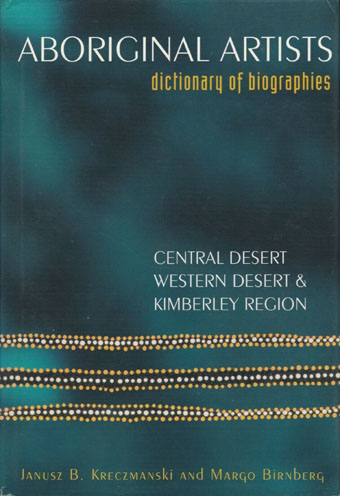
Australian Aboriginal Artist dictionary of biographies
Kreczmanski, Janusz B and Birnberg, Margo (eds.): Aboriginal
Artists: Dictionary of Biographies: Central Desert, Western
Desert and Kimberley Region JB Publishing Australia,
Marleston, 2004.
Aboriginal
Artists of the Western Desert - A Biographical Dictionary by
Vivien Johnson, published by Craftsman House 1994
The Oxford Companion to Aboriginal Art and Culture edited by
Sylvia Kleinert and Margo Neale published by OUP 2000
Aboriginal Artists: Dictionary of Biographies: Central
Desert, Western Desert & Kimberley Region JB Publishing
Australia, Marleston, 2004
Brody, A. 1989 Utopia women’s Paintings: the First Works on
Canvas, A summer Project, 1988-89 exhib. Cat. Heytesbury
Holdings, Perth Brody
A. 1990 Utopia, a picture Story, 88 Silk Batiks from the
Robert Homes a Court Gallery and gallery Collection,
Heytesbury Holdings LTD Perth NATSIVAD database, Latz, P.
1995, Bushfires & Bushtucker, IAD Press, Alice Springs
Brody, A. 1989 Utopia women’s Paintings: the First Works on
Canvas, A summer Project 1988-89 exhib. Cat. Heytesbury
Holdings, Perth Brody
Amadio, N. und Kimber, R., Wildbird Dreaming. Aboriginal Art
from the Central Deserts of Australia, Greenhouse Publ.,
Melbourne 1988; Auckland City Art Gallery, Auckland 1990,
Ausst. Kat.; Australian Aboriginal Art from the Collection
of Donald Kahn. Lowe Art Museum, University of Miami (Hrsg.),
1991, Ausst. Kat.; Droombeelden - Tjukurrpa. Groninger
Museum (Hrsg.), Groningen 1995, Ausst. Kat.; Isaacs, J.,
Australia´s Living Heritage. Arts of the Dreaming, Lansdowne
Press, Sydney 1984; Isaacs, J., Australian Aboriginal
Paintings. Lansdowne, Sydney 1989, ISBN 186302011X; Johnson,
V., Aboriginal Artists of the Western Desert. A Biographical
Dictionary, Craftsman House, East Roseville 1994, ISBN
9768097817; Modern Art - Ancient Icon. The Aboriginal
Gallery of Dreamings (Hrsg.), o.O. 1992, ISBN 0646080520;
Nangara. The Australian Aboriginal Art Exhibition from the
Ebes Collection. The Aboriginal Gallery of Dreamings (Hrsg.),
Melbourne 1996, Ausst. Kat.; Stourton, P. Corbally,
Songlines and Dreamings. Lund Humphries Publ., London 1996,
ISBN 0853316910; The Painted Dream. Contemporary Aboriginal
Paintings. Johnson, V. (Hrsg.), Auckland City Art Gallery,
Auckland 1991, Ausst. Kat.; Tjinytjilpa. The Dotted Design.
Aboriginal Art Galleries of Australia (Hrsg.), Melbourne
1998, Ausst. Kat.; Traumzeit - Tjukurrpa. Kunst der
Aborigines der Western Desert. Die Donald Kahn-Sammlung,
Danzker, J.B. (Hrsg.), Prestel, München und New York 1994,
Ausst. Kat.; Voices of the Earth. Paintings, Photography and
Sculpture from Aboriginal Australia. Gabrielle Pizzi (Hrsg.),
Gallery Gabrielle Pizzi, Melbourne 1996, Ausst. Kat., ISBN
0646288954.
|
|
|

Galeria Aniela provides an independent professional service
and experienced
guidance
representing clients best interest in the art market.
We welcome the opportunity to speak with you, please feel free to
contact us
to discuss ways in which Galeria Aniela can assist you now and in the future.
Whether you are a first-time buyer, an astute investor or enthusiastic
collector, our people focused approach ensures an enjoyable and rewarding
experience.
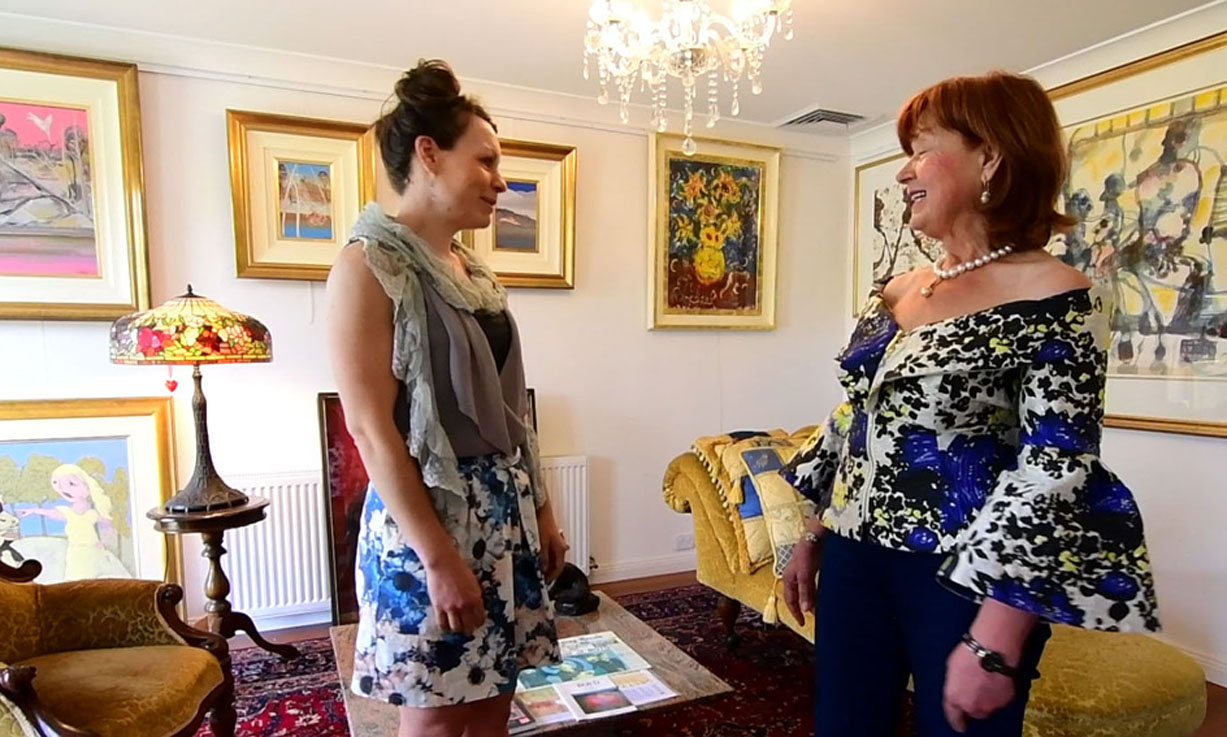
video Galeria Aniela Fine Art broker
Combining a wide network of resources with
expertise in Australian fine art, we
assist clients in all aspects of acquisitions of
fine art objects,
shipping worldwide,
ensuring impeccable
provenance
and quality,
helping save
time and
money.
Testimonials
Founded in 1994, Galeria Aniela exhibited world-class artists
and received celebrities including Sir David
Attenborough, Cameron
O’Reilly
and
Hon Bob Hawke,
Australian Prime Minister.
Galeria Aniela
built
a
strong
standing
in Australia and internationally.
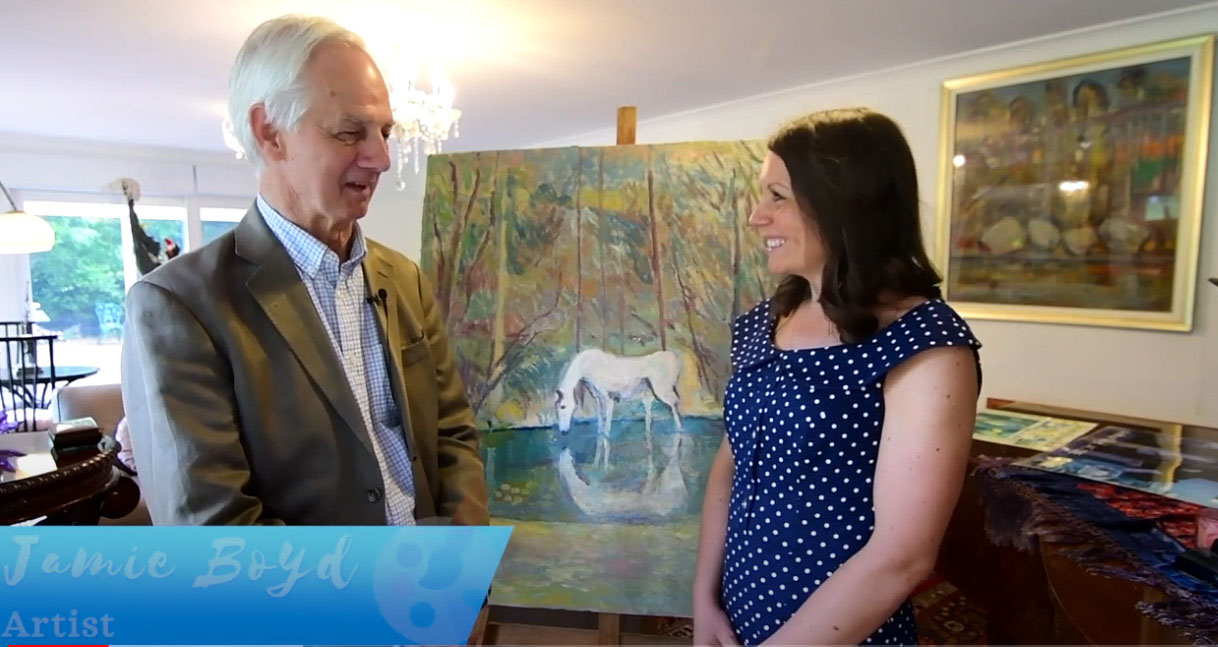
Video |Jamie Boyd, the Boyd family most
important LIVING artist
The
BOYD family
exhibition
in Galeria Aniela coup the
front page
Sydney Morning Herald,
Australian National NEWS ABC TV
and
Sunday Afternoon ABC TV.
John Perceval Retrospective won
the Australian
National NEWS ABC TV and
Charles Blackman Retrospective conquer
Australian
Art Scream
SBS TV.
Works of art live for generations, constantly reborn in the minds of the
beholders to bring new meanings, new dreams, new ways of seeing and experiencing
the world. Be part of this magic world of amazing fine art from the ocean of
tranquillity to
concur
the heart, mind and soul.
The vision of Galeria Aniela is to increase the awareness of Australian
artists
cultural contribution. Through hard work and dedication, in a peaceful manner,
we strive for high ideals to create a better future for the arts.
When you purchase Art from
Galeria Aniela,
you make a valuable contribution to our mission of helping artists to make a
living with their creations and together we make a difference.
|
|
|
|
|
|