|
 Jimmy
Robertson Jampijinpa was a highly original,
profoundly influential,
ground-breaking
master of contemporary Indigenous Australian art. He was a founding figure of
the Lajamanu art movement, and a director of the
Warnayaka Art Centre.
Robertson's
"prime artistic period" and his "creative peak" spans from 1986
to 1992. This narrow, explosive window defines the golden era
of his masterworks and the Lajamanu art movement.
These
works possesses the sheer physical presence of the most exciting
global contemporary art. He translated ancestral Jukurrpa (Dreaming)
stories through his exceptionally vibrant palette of fiery reds and brilliant
yellows, into canvases that captured the blazing, bold energy of the desert
landscape. His
artistic brilliance earned him profound international acclaim. He became one of
the few Indigenous Australian artists to have an artwork formally acquired by
the UNESCO collection in Paris, cementing his legacy as a monumental figure in
contemporary art history.
Legacy:
Musée
d'Orsay Paris,
UNESCO,
National
Gallery of Victoria,
Art Gallery of Western
Australia,
ArtBank,
Kelton Foundation
Santa Monica USA,
Museum Kunsthaus (Göttingen Germany)
|

A proud member since 2000, Galeria Aniela supports the
Aboriginal Art Association of Australia
(AAAA)
and the 60,000-year-old culture that gave the world the most exciting
contemporary art.
|
|
|
 |
Jimmy Robertson
Tjampitjinpa (1944-2002)
Ngapa Jukurrpa
Water Dreaming (1989) | Masterwork
from the 1988–1989 golden era
Synthetic
polymer paint on Belgian linen
126 cm x
86 cm
Framed: 165 cm x
125 cm
Price: $38,000
Inquire About This Work
Literature:
illus.
p. 78
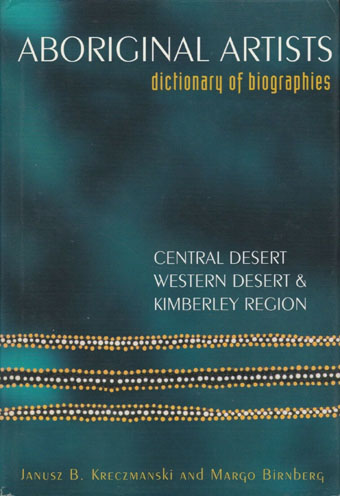
Aboriginal Artists
Dictionary of Biographies
 |
|
The Masterwork: Water Dreaming
(1989)
|
|
The pinnacle of Robertson's artistic recognition is embodied in the commanding
1989 masterwork, Water Dreaming.
The painting stands as a profound acknowledgement of Jimmy Robertson's artistic
brilliance, solidifying his status as a renowned master of contemporary
Indigenous Australian art of the Western & Central Desert regions.
Water Dreaming (1989) is widely regarded as his most significant work, it
achieved historical validation through its permanent record as a "museum quality
masterwork" illustrated on page 78, Aboriginal Artists Dictionary of Biographies
(2004). |
|
|
 |
|
|
|
|
Literature: page
78 (illus.)
Aboriginal Artists
Dictionary of Biographies |
|

|
|
|
|
The Life, Career, and Legacy of
Jimmy Jampijinpa Robertson (1944–2002)
|
|
Jimmy Robertson Jampijinpa
(c. 1944–2002) is an absolute cornerstone of the Lajamanu art movement
and deserves central recognition. He was one of the most charismatic,
innovative, and profoundly influential masters of contemporary Indigenous
Australian art.
Born
at Makarunga near Chilla Well in the Tanami Desert in Northern Territory, he emerged in
the mid-1980s as one of the region's most influential and charismatic cultural
leaders. Robertson served
as a founding director of the
Warnayaka Art Centre and was a dedicated
educator, teaching traditional dance and lore to young boys at the Lajamanu
School.
Significance:
Robertson was one of the key painters from the Lajamanu
who began working with the original painting group in 1986.
His early works were selected for landmark European exhibitions introducing
Western Desert art to the global stage, including the historic 1983 exhibition
D'un autre continent: l'Australie, le rêve et le réel.
-
The NGV houses important early works by Robertson, including his historic
1986 painting Ngurlu Jukurrpa (Seed Dreaming). This piece represents
an essential Warlpiri ceremonial narrative of women transforming ground seed
into traditional bread.
-
His masterworks are frequently featured in touring North American
exhibitions showcasing the raw, early transitions of central Australian body
paint and ground design onto permanent boards.
-
Because most of Robertsons's
output from the 1988–1989 golden era
is tightly held by state museums or legacy private collections, his landmark
pieces are primarily accessible to the public when curated into specific
Indigenous Australian retrospectives
International Institutions & Landmark Exhibitions
The UNESCO Collection (Paris)
Robertson holds the rare distinction of being one of the few Indigenous
Australian artists to have an artwork formally acquired by the permanent UNESCO
Art Collection.
The Role of Jimmy Robertson Jampijinpa
-
A Founding Pioneer:
Robertson was one of the critical cultural leaders who took part in the
initial 1986 traditional painting group in Lajamanu. He was an essential
bridge between ancient traditions and modern aesthetic forms.
-
Leadership at Warnayaka:
As a founding director of the
Warnayaka Art
Centre, he wasn't just a painter; he was a vital
custodian of Warlpiri culture. He spent years acting as an educator,
teaching traditional songline ceremonies, law, and dance to younger boys at
the local Lajamanu school.
-
A Cultural Ambassador:
He famously expanded the reach of Warlpiri art globally. He traveled to
bring traditional dances and canvases to Paris, the United States, and major
Australian capital cities. He even famously set up an impromptu stall of
boomerangs on a Parisian boulevard, showcasing his colorful and independent
character.
The
1989 Masterwork: Water Dreaming
Water Dreaming (1989) highlights what many art historians consider
to be his absolute creative peak.
-
The Style:
Robertson’s style was lauded for its striking physical presence and
minimalist power. Unlike the highly complex, layered dots of some of his
contemporaries, he painted in a very bold, classical format. He would
position powerful, ancient ancestral motifs on the canvas and fill the
negative space with stark, contrasting monochrome dotting to make the sacred
geometry "pop".
-
The Significance:
As a primary custodian of the Ngapa Jukurrpa (Water Dreaming), this
1989 canvas captured the spiritual map of the desert's life-giving water
tracks with monumental energy. The painting has been officially celebrated
in texts like the Aboriginal Artists Dictionary of Biographies as a
"museum-quality masterwork" due to its unparalleled raw dynamism.
He stands alongside artists like Abie Jangala and Lorna
Fencer as the very backbone of what made Lajamanu art globally
revolutionary.
Jimmy Robertson
Creative Peak (1986–1992)
Robertson's creative peak was defined by absolute clarity. He proved that
Indigenous art has
the sheer physical presence of the most exciting global contemporary art, and
is profoundly deep—a philosophy that forever altered how global art critics
viewed Western Desert painting.
During his "prime artistic period", Robertson transitioned from a
traditional ritual leader into a pioneering contemporary artist.
Art historians, curators and collectors isolate this period as his most
significant due to three distinct evolutions in his work:
-
The Monumental Masterworks (1988–1990):
This is when his artistic execution caught up to his vast cultural
knowledge. In this tight window, he produced massive canvases, including
1990 pieces like Watia Warnu Jukurrpa (Seed Dreaming) and
his landmark 1989 Water Dreaming.
The
painting Water Dreaming (1989) is
widely considered Jimmy Robertson most significant work, gaining
international recognition for its "sheer physical presence" and being officially
designated a "museum
quality masterwork" in the
Aboriginal Artists Dictionary of Biographies
(p. 78).
-
His canvases during these years were characterized by a deep, authoritative
confidence—the compositions grander, and the physical application of paint
incredibly bold.
-
Global Validation (1987–1992):
The art world reacted instantly to what he was producing at this peak. His
1987 debut at the Gallery Gabrielle Pizzi in Melbourne launched him
onto the world stage. By the end of this peak period, his works were touring
the United States and Europe, ultimately making him one of the incredibly
rare Indigenous artists to have a piece permanently acquired by the
UNESCO Art Collection in Paris.
🎨
Why This Period Stands Apart from His Later Work
While Robertson continued to paint until his passing in 2002, his mid-to-late
1990s work evolved alongside changes in the central desert art market.
|
Prime Peak Era (1986–1992) |
Later Career Era (Mid-1990s–2002) |
|
Aesthetic:
High-contrast, bold, ancestral geometry framed by stark, single-colour
monochrome dots.
Elevated Visual Description:
Integrated his signature use of high-saturation reds, black and yellows
to directly address his unique aesthetic brilliance. |
Aesthetic:
More fluid, looser dotting structures, utilizing a broader, softer
palette of colours. |
|
Energy:
Raw, urgent, and monumental. The work directly mirrored ancient ground
and body-paint compositions.
Anchored His Achievements:
Explicitly tied his artistic power to his historic international
milestone with the UNESCO collection, proving his global contemporary
status. |
Energy:
More reflective, experimental, and heavily tailored toward traditional
canvas formats. |
|
Scarcity:
Highly limited output. Many works were painted under the early structure
of the
Warnayaka Art
Centre. |
No Scarcity:
Widely distributed as Lajamanu became a more established art hub
globally. |
Jimmy Robertson Jampijinpa was a highly original and profoundly influential
master of contemporary Indigenous Australian art. He was a ground-breaking major
artist of the Lajamanu art movement, and a director of the Warnayaka Art Centre.
Robertson's work possesses the sheer physical presence of the most exciting
global contemporary art. He translated ancestral Jukurrpa (Dreaming)
stories through his exceptionally vibrant palette with fiery reds and brilliant
yellows, into canvases that captured the blazing and bold energy of the desert
landscape.
His artistic brilliance earned him profound international acclaim. He became one
of the few Indigenous Australian artists to have an artwork formally acquired by
the UNESCO collection in Paris, cementing his legacy as a monumental figure in
contemporary art history.
European Exhibitions
-
Paris (1983): Featured in the seminal
exhibition D'un autre continent: l'Australie, le rêve et le reel at the ARC,
Musée d'Art Moderne.
-
Grenoble (1991):
Showcased in the Ngurra Mala: Les lieux du Rêve exhibition at the
École des Beaux-Arts.
International
Legacy
A true ambassador for Warlpiri culture,
Robertson achieved significant international acclaim and is remembered as an
"amazing and colourful individual". During his visits to France, he brought a
direct piece of his culture to the heart of Europe.
Artistic Legacy and
Vision
As a primary custodian of his
country’s sacred Dreamings (Jukurrpa), Robertson painted with a definitive
authority. He was celebrated for his exceptionally classical painting style,
which combined ancient, powerful iconography with a bold and vibrant use of
modern colour. His canvas captured ancestral themes—such as the Water (Ngapa)
and Dog (Malikijarra) Dreamings—transmuting raw cultural tradition into
sophisticated visual compositions.
Robertson’s mastery lay in his
ability to command the canvas with sheer physical presence, making his work
highly sought after by collectors and institutions worldwide.
Robertson is celebrated for his vibrant, bold use of colour and a style that
bridged ancient motifs with a modern aesthetic. His work often depicted sacred
"Dreamings" (Jukurrpa) for which he was a primary custodian, including:
-
Ngapa Jukurrpa (Water Dreaming)
-
Malikijarra
Jukurrpa (Two Dogs Dreaming)
-
Watiyawarnu (Seed Dreaming)
-
Yunga (Fire Dreaming)
His
paintings are noted for their powerful physical presence, often featuring
ancestral motifs set against monochrome dot backgrounds that highlight the
spiritual significance of the landscape.
Major Career
Achievements
Robertson’s artistic
achievements earned him significant international prestige. He was one of the
leading artists selected for landmark global exhibitions that introduced
contemporary Desert art to the international stage, including:
-
The Musée d’Art Moderne
(Paris, 1983): Featured in the landmark exhibition D’un autre continent:
l’Australie, le rêve et le réel.
-
The Gabrielle Pizzi
Gallery (Melbourne, 1987): Showcased in the historic, very first formal
exhibition of Lajamanu artists.
-
The École des
Beaux-Arts (Grenoble, 1991): Exhibited in the highly acclaimed Ngurra Mala:
Les lieux du Rêve exhibition.
International Impact
A true
ambassador for Warlpiri culture, Robertson achieved significant international
acclaim. He is famously remembered in Paris for his spirited presence, which
included setting up an impromptu boomerang stall on a major boulevard while
visiting for exhibitions.
Major European Exhibitions
-
Paris (1983): D'un autre continent: l'Australie, le rêve et le
réel at the ARC,
Musée d'Art Moderne de Paris.
-
Grenoble
(1991): Ngurra Mala: Les lieux du Rêve at the École des
Beaux-Arts.
Sacred Sites and Custodianship
Robertson was a highly respected initiate and guardian of significant sacred
sites. His paintings were not merely aesthetic but were powerful assertions of
his responsibility to care for his traditional Country. Key sites under his
custodianship included:
-
Makarrangu: His birthplace and a site associated with the
Dreaming of the Dog (Dingo), which only Robertson's family is culturally
permitted to paint.
-
Yunga: A site deeply linked to Fire Dreaming.
-
Warntapari: The location where the Water Dreaming journey
concluded.
-
Jurntuwarriji: A theme and site inheritance passed down from his
grandfather.
Family Artistic Lineage
Robertson was part of a prestigious artistic dynasty that continues to influence
Australian art today.
-
Wives and
Collaborators: He lived in Lajamanu with his two wives and nine
children. He frequently collaborated with his wife, Denise Napangardi
Tasman, herself a well-known artist.
-
Next
Generation: His son, Marshall Jangala Robertson, is a
highly acclaimed artist who continues to paint the Water and Seed Dreamings
passed down from his father.
-
Grandchildren: His artistic legacy extends to his granddaughter,
Chantelle Nampijinpa Robertson, a third-generation painter at
Warlukurlangu Artists who depicts her
grandfather’s Jukurrpa stories.
International Legacy
A true
ambassador for Warlpiri culture, Robertson achieved significant international
acclaim and is remembered as an "amazing and colourful individual". During his
visits to France, he famously set up a roadside stall on a major boulevard in
Paris to sell boomerangs, bringing a direct piece of his culture to the heart of
Europe.
Jimmy Robertson is remembered by some in Paris
as an amazing and
colourful individual, who attended the very first exhibition of the Lajamanu
artists at the Gallery Gabrielle Pizzi in Melbourne in 1987.
Robertson is also remembered by some artists in Paris
for taking a trunk full of boomerangs and setting up a roadside stall on one of
the main Paris boulevards.
The history of the
Warnayaka
Art Centre
is a remarkable story of cultural resilience and the adaptation of ancient
traditions to the modern world.
Origins and First Contact
The centre was founded in the mid-1980s by "desert walkers"—Warlpiri
people who had spent their early lives in the bush and could still remember
their first contact with Europeans. For these elders, art was a primary way to
record and transmit knowledge of land, law, and ceremony.
The Move to Canvas (1985–1986)
While the Warlpiri had practiced art through body painting, sand mosaics, and
wooden carvings for millennia, they were initially hesitant to transfer sacred Jukurrpa (Dreaming)
stories to permanent mediums for a Western audience.
-
A
Turning Point: In
1985, after extensive communal discussion, elders agreed that painting could
serve as a vital tool for education and cultural preservation.
-
The
John Quinn Course (1986): An adult educator, John Quinn, provided the first paints and
canvases. Before materials were widely available, artists famously painted
on repurposed materials, including Masonite boards from derelict
houses using house paints and PVAs.
Growth and Recognition
The movement rapidly gained momentum. By 1988, a formal artists’ company
was established, and Lajamanu works were being exhibited internationally.
-
Formal Founding: The
Warnayaka Art Centre was officially established in 1991.
-
Institutional Acclaim: Major
institutions like the National
Gallery of Victoria (NGV) began acquiring
large-scale Lajamanu panels as early as 1989.
Modern Evolution
Today, Warnayaka is an Aboriginal-owned social enterprise representing
approximately 160 artists. It has evolved to embrace new forms of
expression:
-
Generational Shift: The
centre is now largely run by the children and grandchildren of the founding
artists, ensuring the survival of the Warlpiri
Ngalia Laws.
-
New
Mediums: While traditional dot and line work remains central,
younger artists are exploring digital art and contemporary colour
palettes that bridge tradition with global modern art.
|
|
|
Exhibitions
Jimmy Robertson
Tjampitjinpa Jampijinpa
has exhibited
his paintings
widely in
Australia, all over the USA, France, Germany
and
also he performed
his dances, songs.
1983 -
City of Paris, Museum of Modern Art,
D'un autre continent: I'Australie le
reve et le reel, ARC, France
1983 -
Musée d'Orsay Paris France
1987 - Australian Made, Hogarth Galleries, Sydney, NSW
1988 - Paintings from Lajamanu, Gallery Gabrielle Pizzi,
Melbourne, Victoria
1988 - The Fifth National Aboriginal Art Award Exhibition, Museum and
Art Gallery of the NT, Darwin
1989 - Mythscapes,
Aboriginal Art of the Desert, National Gallery of Victoria
1990 - Lajamanu Dreamings, Technical and Further Education College,
Darwin, NT
1990 - The Seventh National Aboriginal Art Award Exhibition, Museum and
Art Gallery of the NT, Darwin
1991 - Lajamanu Dreamings 2, Technical and Further Education College,
Darwin, NT
1991 - Aboriginal Art, Australian Embassy, Washington, USA.
1991 - Ngurra Mala, les lieux du Reve, Ecole des beaux-arts, Grenoble,
France
1991 - Yapa, Peintres Aborigenes de Balgo et Lajamanu, Baudoin Lebon
Gallery, Paris
1991 - The Eighth National Aboriginal Art Award Exhibition, Museum and
Art Gallery of the NT, Darwin
1993 - Tjukurrpa, Desert Dreamings, Aboriginal Art from Central
Australia
(1971 -1993) Art Gallery of Western Australia, Perth WA
1993 - The Tenth National Aboriginal Art Award Exhibition, Museum and Art
Gallery of the NT
1994 - Yapakurlangu Wirrkardu, Batchelor College, Tennant Creek, NT
1996- Bencia Open Studios, California
1996 - Kormilda College
1996 - The Rainbow Serpent, Sydney, NSW
1997 - March Indigenart,
Perth
1997- "Innenseitte" Gottingen Germany
COLLECTIONS
Musée
d'Orsay Paris
National
Gallery of Victoria (NGV)
City of Paris
Collection
Musée d'Art
Moderne de Paris
UNESCO
UNESCO
Warnayaka Art Centre UNESCO
Warnayaka Art Centre Jimmy Robertson
Jampijinpa
www.anu.edu.au/linguistics/nash/aust/wlp/Yapa_leaflet(E2).pdf
Kelton Foundation (Santa Monica,
USA)
Museum Kunsthaus (Göttingen Germany)
Museum and Art Gallery of the NT, Darwin
Baudoin Lebon Gallery, Paris
Bencia Open Studios, California
Museum Gottingen, Germany
Homes a Court Gallery and gallery Collection (Perth)
Anthropology Art Museum, Perth, Australia
Victorian Art Centre Melbourne
Art Gallery of South Australia
Anthropology Art Museum Perth
Art Bank Sydney
Art Gallery of Western
Australia


Women's food gathering dreaming; 1987; 1988/0079
Women's food gathering dreaming; 1987; 1988/0078
National Gallery of Victoria works by this artist
Jimmy Jampijinpa Robertson
National Gallery of Victoria works by this artist
Jimmy Jampijinpa Robertson
https://www.ngv.vic.gov.au/essay/a-bold-aesthetic-the-lajamanu-panels/
Written by: Judith Ryan, Curator of Aboriginal Art, National Gallery of
Victoria (in 1989)

 
Ngurlu Jukurrpa (seed Dreaming)Jimmy Jampijinpa Robertson
Jangala’s Two Nangala Seed Dreaming at Paralu 1986
Ngurlu Jukurrpa (Seed Dreaming)Jimmy Jampijinpa Robertson |
|
|
|
|
Literature
Source
& Further References |
-
Aboriginal Artist dictionary of biographies
Kreczmanski,
Janusz B and Birnberg, Margo (eds.): Aboriginal Artists: Dictionary of
Biographies: Central Desert, Western Desert and Kimberley Region JB
Publishing Australia, Marleston, 2004.
-
Aboriginal Artists of the Western Desert - A Biographical Dictionary by
Vivien Johnson, published by Craftsman House 1994
-
The Oxford Companion to Aboriginal Art and Culture edited by Sylvia
Kleinert and Margo Neale published by OUP 2000
-
Aboriginal
Artists: Dictionary of Biographies: Central Desert, Western Desert &
Kimberley Region JB Publishing Australia, Marleston, 2004
-
Brody, A.
1989 Utopia women’s Paintings: the First Works on Canvas, A summer
Project, 1988-89 exhib. Cat. Heytesbury Holdings, Perth Brody
-
A. 1990
Utopia, a picture Story, 88 Silk Batiks from the Robert Homes a Court
Gallery and gallery Collection, Heytesbury Holdings LTD Perth NATSIVAD
database, Latz, P. 1995, Bushfires & Bushtucker, IAD Press, Alice
Springs
-
Brody, A.
1989 Utopia women’s Paintings: the First Works on Canvas, A summer
Project 1988-89 exhib. Cat. Heytesbury Holdings, Perth Brody
-
Amadio, N. und
Kimber, R., Wildbird Dreaming. Aboriginal Art from the Central Deserts
of Australia, Greenhouse Publ., Melbourne 1988; Auckland City Art
Gallery, Auckland 1990, Ausst. Kat.; Australian Aboriginal Art from the
Collection of Donald Kahn. Lowe Art Museum, University of Miami (Hrsg.),
1991, Ausst. Kat.; Droombeelden - Tjukurrpa. Groninger Museum (Hrsg.),
Groningen 1995, Ausst. Kat.; Isaacs, J., Australia´s Living Heritage.
Arts of the Dreaming, Lansdowne Press, Sydney 1984; Isaacs, J.,
Australian Aboriginal Paintings. Lansdowne, Sydney 1989, ISBN
186302011X; Johnson, V., Aboriginal Artists of the Western Desert. A
Biographical Dictionary, Craftsman House, East Roseville 1994, ISBN
9768097817; Modern Art - Ancient Icon. The Aboriginal Gallery of
Dreamings (Hrsg.), o.O. 1992, ISBN 0646080520; Nangara. The Australian
Aboriginal Art Exhibition from the Ebes Collection. The Aboriginal
Gallery of Dreamings (Hrsg.), Melbourne 1996, Ausst. Kat.; Stourton, P.
Corbally, Songlines and Dreamings. Lund Humphries Publ., London 1996,
ISBN 0853316910; The Painted Dream. Contemporary Aboriginal Paintings.
Johnson, V. (Hrsg.), Auckland City Art Gallery, Auckland 1991, Ausst.
Kat.; Tjinytjilpa. The Dotted Design. Aboriginal Art Galleries of
Australia (Hrsg.), Melbourne 1998, Ausst. Kat.; Traumzeit - Tjukurrpa.
Kunst der Aborigines der Western Desert. Die Donald Kahn-Sammlung,
Danzker, J.B. (Hrsg.), Prestel, München und New York 1994, Ausst. Kat.;
Voices of the Earth. Paintings, Photography and Sculpture from
Aboriginal Australia. Gabrielle Pizzi (Hrsg.), Gallery Gabrielle Pizzi,
Melbourne 1996, Ausst. Kat., ISBN 0646288954.
|
|
|
A proud member since 2000, Galeria Aniela supports the
Aboriginal Art Association of Australia
(AAAA)
and the 60,000-year-old culture that gave the world the most
exciting contemporary art. |
|
 |
Galeria Aniela:
Investment-Grade Artworks of Flawless Provenance
|
|
An
independent advisory and
expert sourcing
for
significant, original artworks by renowned Australian
artists. With over 30 years of fine art expertise,
we help you seamlessly navigate the art market, optimising your
time
and securing maximum
value.
-
Borderless Procurement:
We transitioned to a fully integrated
international digital model, catering to an
international clientele and global collectors while
proudly supporting
Australian artists.
-
Trusted Connections:
We
nurture long-term relationships, building deep trust
and delivering a truly personalised,
rewarding
acquisition
experience since 1994.
|
 |
Acquire or Sell Investment-Grade
Artworks
|
-
Utilizing our extensive industry network, we assist you
in identifying the optimal, most profitable pathways, whether you are a first-time buyer
or an astute investor, we guide you
through every aspect of fine art transactions, providing
trusted expertise.
-
If you wish to
buy
or sell works by
Arthur Boyd,
Brett Whiteley,
Fred Williams,
John Perceval or other significant artists—or
if you require a professional valuation referral—please
contact our
specialist.
We are prompt, professional, and friendly.
Phone:
+61 409 980 618
Email:
art@galeriaaniela.com.au
|
|
Three Decades of Fine Art Heritage and Global Acclaim
|
|
A Visionary Legacy: Founded in 1994 in
Kangaroo Valley, Galeria Aniela
Fine Art
Gallery & Sculpture Park
pioneered museum-quality
exhibitions program, bringing world-class masters and blue-chip
Australian artists
to a country setting.
Institutional Recognition:
The first commercial art gallery freely
listed in the
National
Gallery of Australia's
Artonview (1997-2004)
alongside elite national institutions, state galleries
and museums.
Art
Market Prestige: Highlighted by landmark modernist
retrospectives officially launched by Australia’s
leaders and heads of the peak art institutions:
|
|


|
|
Distinguished Guests & Cultural Icons: Over the years, Galeria Aniela has had the unique
privilege of welcoming esteemed guests, celebrities, and
art patrons to our exhibitions. Featured below are
historic visits from international icon
Sir David Attenborough,
Cameron O’Reilly,
and former Australian Prime Minister
Bob Hawke. |
|
|
|
⭐⭐⭐⭐⭐
What people say |
|
|
|


Jamie Boyd and Aniela Kos with
Cameron O’Reilly
(1997) | Aniela Kos
and
Cameron Menzies
(Nov. 2023)
|
|
|
|
Fine Art is one of the most enjoyable and viable
investments,
essential to wellbeing.
|
Art-As-Investment
Buy-Value-Sell
Resources |
Galeria Aniela — International Fine Art Advisory &
Procurement — Australia
Phone:
+61 409 980
618 |
Email:
art@galeriaaniela.com.au |
Copyright
|
Disclaimer
|
 |  |  |  |
|
